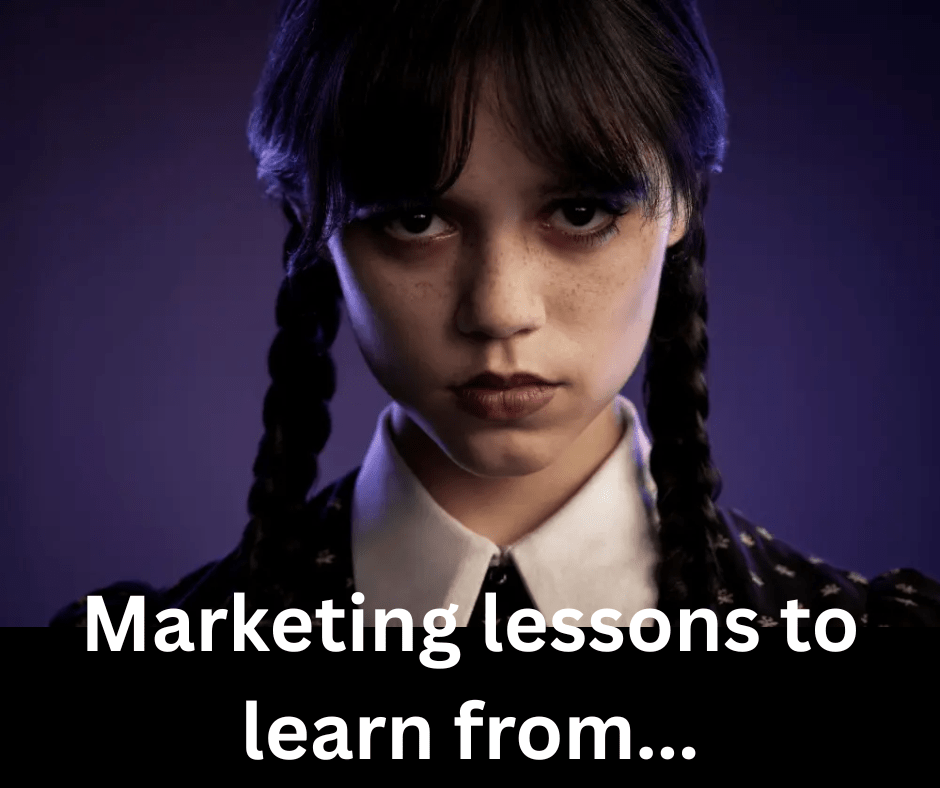
So, we all remember the absolute phenomenon that was the first season of Wednesday, right?
It took the world by storm.
Everyone was talking about Jenna Ortega’s deadpan stare, the iconic dance, and that ridiculously catchy theme song. It was a proper cultural moment. Netflix had a massive hit on their hands.
But then, Season 2 dropped (and that too, half of it after ). And while it wasn’t a complete disaster, it certainly did not capture the same magic, did it?
In fact, many people, including myself, felt a bit… underwhelmed. And I think a big part of that, beyond just the script or plot choices, was the marketing.
Where did the hype go?
Think back to Season 1. The teasers, the trailers, the character reveals, everything felt fresh and exciting. They perfectly captured the quirky, dark, and charming vibe of the show.
We knew just enough to be intrigued without feeling like everything was spoiled. The viral dance challenge was not even something Netflix directly marketed, it was organic, but it stemmed from the show’s initial strong presence.
For Season 2?
It felt… quiet. Almost like they assumed everyone would just know it was coming and tune in. And while a large portion of the initial audience probably did, the lack of a sustained, impactful marketing campaign meant that new viewers were not being drawn in, and even existing fans might have forgotten to mark their calendars.
Lesson 1: Don’t assume your audience will just show up.
Even with a massive hit, you cannot rest on your laurels. You need to keep the fire stoked.
A study by Statista in 2023 showed that over 50% of consumers discover new content through recommendations or targeted advertising. If you’re not actively putting your show (or product) in front of people, you’re missing out.
The tease vs. the reveal
One of the biggest issues for me was the lack of compelling teasers. With Season 1, every little snippet gave us more to chew on without giving away the main course. We wondered about the mysteries, the characters, and the Nevermore Academy itself.
Season 2’s marketing, or what little there was, felt a bit generic. It focused heavily on Wednesday’s continued struggles with her powers or her relationships, which, while central to her character, didn’t offer a new hook. There wasn’t that “what new supernatural threat will she face?” or “what fresh mystery will unfold?” element that felt so strong the first time around.
Lesson 2: Keep the mystery alive, but offer new bait.
Think about how movie trailers work. They give you a taste, a hint of the plot, a glimpse of the action, but they never give away the ending. For a returning series, you need to assure fans of what they loved, but also introduce new elements that will pique their interest. If it’s just “more of the same,” people might lose interest.
Where was Wednesday? the social media silence
Remember how Wednesday (and Jenna Ortega) absolutely dominated social media during Season 1? The dance, the memes, the behind-the-scenes glimpses. It was everywhere.
For Season 2, that organic, buzzing social media presence felt significantly diminished. Was there less effort put into engaging with the fanbase online? Were there fewer shareable moments created specifically for social platforms? It certainly felt that way.
Nowadays, if your show isn’t generating conversation and shareable content on platforms like TikTok, Instagram, and X (formerly Twitter), you’re losing a huge chunk of potential audience engagement.
A recent report by Brandwatch indicated that social media conversations can increase TV show viewership by up to 15% for new releases.
Lesson 3: Social media isn’t just for launch. It’s for sustained engagement.
Your audience lives online. They want to interact, share, and discuss. Create content that encourages this. Think about viral challenges, behind-the-scenes peeks, Q&As with cast members, or even just polls about fan theories. Keep the conversation going!
The “if it ain’t broke, don’t fix it” fallacy
Sometimes, when you have a winning formula, there’s a temptation to try and “elevate” it or change things up for the sake of novelty. While innovation is good, completely abandoning what made people fall in love with your product (or show) in the first place can be detrimental.
A big part of Wednesday’s charm was its unique blend of dark humor, supernatural mystery, and a gothic aesthetic. The marketing for Season 1 clearly leaned into this. For Season 2, the trailers felt a bit more generic teen drama, less Addams Family spin-off. It felt like they tried to broaden the appeal by softening the edges, which ironically, might have alienated the core fanbase who loved those sharp edges.
Lesson 4: Understand your core appeal and don’t dilute it.
Know what your audience loves about you. Is it your unique style? Your specific niche? Your consistent quality? Don’t be afraid to evolve, but make sure that evolution builds upon your strengths, rather than abandoning them. Consumer loyalty can be fickle. A study by Adobe found that 89% of consumers are loyal to brands that share their values or offer unique experiences.
The “where are the characters?” conundrum
Beyond Wednesday herself, the first season had a fantastic supporting cast that fans adored: Enid, Thing, Eugene, even Principal Weems. The marketing for Season 1 highlighted these characters and their dynamics.
For Season 2, the promotional material seemed to focus almost exclusively on Wednesday. While she’s the star, the ensemble cast is a huge part of the show’s appeal. People connect with characters, and if their favorites aren’t even hinted at in the promotions, their excitement might wane.
Lesson 5: Use your entire cast (of features/benefits).
Think of your product or service as a TV show. While you might have a “star feature,” don’t forget to highlight all the other fantastic aspects that make it great. Each feature appeals to different segments of your audience. If you only promote one thing, you’re missing out on connecting with others.
The takeaway: don’t get complacent
The biggest lesson from Wednesday Season 2’s marketing (or lack thereof) is this: complacency is a killer. Just because you had a massive hit once doesn’t guarantee future success. You need to keep working, keep engaging, and keep giving your audience reasons to stick around and get excited.
Whether you’re selling a product, running a business, or trying to maintain an audience for your creative work, these lessons are universal:
- Never stop marketing, even for established hits.
- Keep your messaging fresh and intriguing.
- Actively engage your audience where they are (especially on social media).
- Stay true to your core identity while offering new value.
- Showcase all the great things you have to offer, not just the obvious.
I’m still a fan of Wednesday and I hope Season 3 (or the other half of season 2) learns from these mistakes. But as for us, let’s take these lessons to heart and make sure our own “Season 2s” are even bigger hits than our “Season 1s”!
 The life of a marketing girl